
Surface conditioning is a key requirement in industries where a clean, accurate, and consistent material surface is observed. As manufacturing quality standards become more stringent, companies largely depend on tools that can provide reliability, precision, as well as efficiency in the implementation of surface preparation. Out of the various abrasive solutions available in today’s market for metalworking shops or any other place similar to them, Surface Conditioning Discs are among the most versatile, besides being the best performers.
Non-woven surface conditioning discs provide controlled material removal and good substrate integrity with a smooth blended finish and excellent cross-material performance. The construction-nylon fiber, abrasive grain, and resin bonding allows these to perform uniquely in balancing cut aggressiveness together with surface protection. Be it deburring or cleaning or blending or polishing, or even simply preparing the surface for further coating/finishing application, Surface Conditioning Discs deliver strong, consistent results.
This article provides a deep dive into the material science of Surface Conditioning Discs, their structural advantages, performance benefits, and industry applications—down to why they have become an essential element in modern manufacturing processes. There is powerful reasoning behind reliable functionality; inside preferred choices among professionals when hunting for efficiency as well as exactness.
Understanding Surface Conditioning Discs in Modern Manufacturing
What Defines a Surface Conditioning Disc
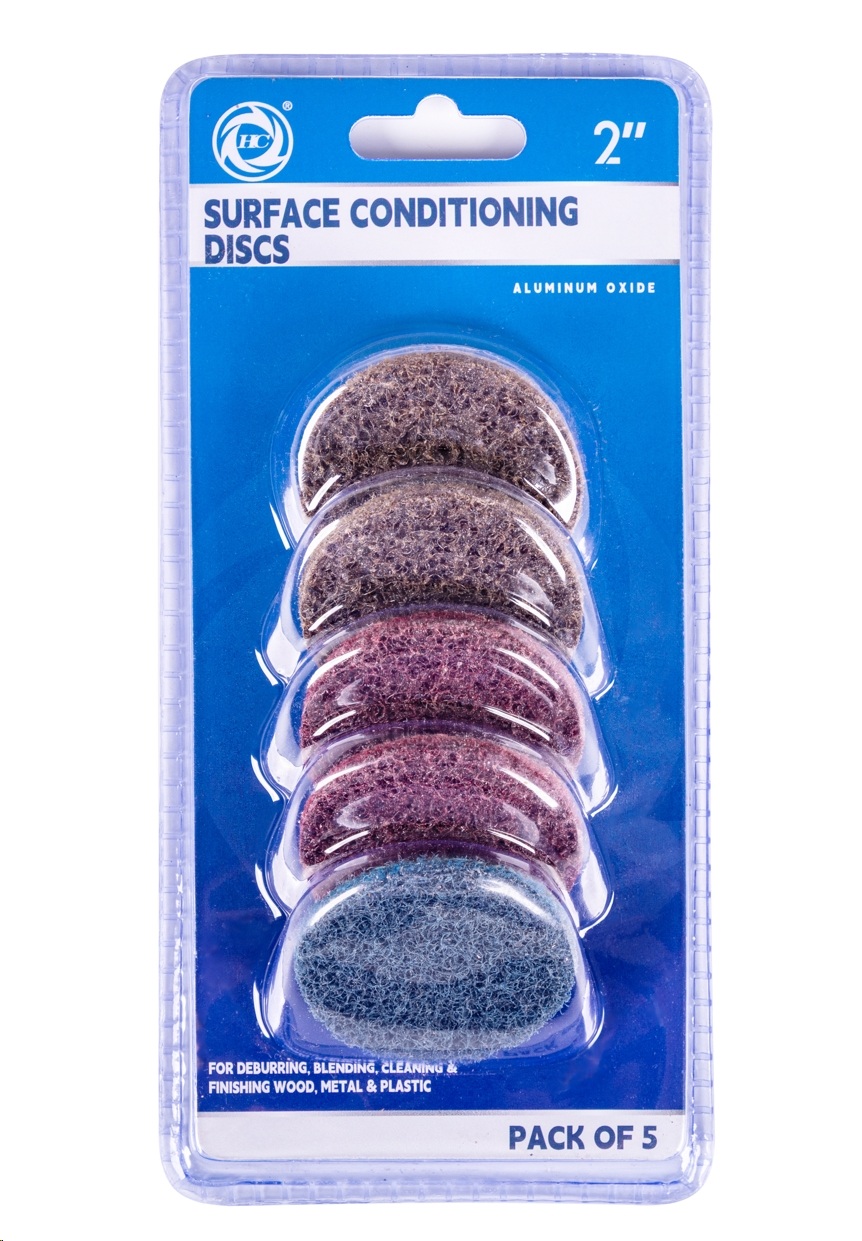
Surface Conditioning Discs are engineered for surface preparation applications, which include cleaning, blending, deburring, and finishing. Instead of using a coated abrasive disc dependent on either paper or cloth backing, the disc contains an open-web non-woven nylon structure impregnated with abrasive grain- aluminum oxide, silicon carbide, zirconia, or ceramic.
This gives an unusual combination of flexibility and strength, permitting the disc to become contoured with a surface while maintaining constant abrasion. Particularly well suited for such areas as curved surfaces, small spaces, and articles with complicated geometries, Surface Conditioning Discs hold a top ranking among comparable products.
Why Their Structure Enhances Performance
As the disc is rotating, air passes through the open-web non-woven structure. This airflow prevents a high build-up of temperature that would be appreciated by someone working on heat-sensitive metals or thin gauge material, and also low clogging to enable the disc to maintain cutting performance throughout its life.
Moreover, the structure maintains dimensional accuracy because Surface Conditioning Discs do not aggressively grind away material but remove it slowly. Such a controlled, slow action becomes vital in industries that work on precision components like electronics, aerospace, and medical equipment manufacturing.
Material Composition and Its Impact on Performance
Abrasive Grain Varieties
The abrasive grains embedded in Surface Conditioning Discs determine their cutting strength, durability, and finish quality. Each grain type serves a different purpose:
Aluminum Oxide
Aluminum oxide is durable, versatile, and widely used for general cleaning, blending, and finishing. It works well on various metals, including steel, aluminum, and alloys, making it the most common grain found in Surface Conditioning Discs.
Silicon Carbide
Silicon carbide is sharper and harder than aluminum oxide. It is ideal for applications requiring a fine finish on non-ferrous materials such as aluminum, brass, titanium, and composites. Its sharp grain provides fast cutting with smooth results.
Zirconia
Zirconia offers aggressive cutting action and is ideal for heavy deburring and weld blending. It performs well under high pressure and provides long-lasting performance on stainless steel and harder metals.
Ceramic Abrasives
Ceramic grains deliver top-tier performance for demanding applications. Their micro-fracturing properties allow them to maintain sharpness longer, making ceramic Surface Conditioning Discs a premium choice for industrial environments requiring high productivity.
Resin Bonding and Durability
The resin bonding system is critical for securing abrasive grains within the non-woven structure. High-quality Surface Conditioning Discs use heat-resistant resins that prevent premature degradation during high-speed operations. This ensures durability, consistent cutting, and long disc life.
Technical Advantages of Surface Conditioning Discs
Controlled Material Removal
Surface Conditioning Discs excel at delivering gradual, controlled abrasion. This ensures the surface is smoothed and blended without removing excessive material. This is particularly important when maintaining dimensional tolerances.
Minimal Heat Generation
Heat buildup can weaken metals, damage coatings, or discolor surfaces. Because Surface Conditioning Discs have an open-web structure that dissipates heat, they protect substrates from thermal damage and provide cool grinding performance.
Reduced Loading and Clogging
Traditional abrasives may quickly become clogged with debris, reducing their effectiveness. Surface Conditioning Discs resist loading, allowing consistent performance even on materials like aluminum or softer metals.
Flexibility and Conformability
The non-woven structure allows discs to bend and adapt to workpiece contours. This flexibility enhances finish uniformity and makes these discs highly suitable for curved surfaces, inside corners, and intricate parts.
Industrial Applications of Surface Conditioning Discs
Automotive Industry
Surface Conditioning Discs are essential in automotive repair, restoration, and manufacturing workflows.
Paint and Bodywork Preparation
Technicians use these discs to prepare surfaces for painting by removing old coatings, oxidation, and imperfections. Their ability to create consistent surface textures improves paint adhesion.
Weld Blending and Metal Restoration
Surface Conditioning Discs provide smooth weld blending, ensuring that welded areas match surrounding metals without gouging or removing too much material.
Metal Fabrication and Manufacturing
Metal fabrication shops rely heavily on Surface Conditioning Discs to maintain workflow efficiency and quality.
Deburring and Edge Smoothing
Cutting, punching, and machining operations leave sharp edges and burrs. Surface Conditioning Discs remove these imperfections while preserving the part’s geometry.
Stainless Steel Finishing
These discs are commonly used to produce brushed finishes or to prepare stainless steel components for electro-polishing or passivation.
Aerospace Component Finishing
Aerospace manufacturing requires high levels of precision, and Surface Conditioning Discs help meet these demands.
Precision Surface Preparation
Components used in engines, turbines, and structural assemblies require consistent surface quality. The discs provide smooth finishes without weakening the substrate.
Cleaning and Oxide Removal
Surface Conditioning Discs effectively remove oxidation and contaminants that could compromise the functionality or safety of aerospace parts.
Industrial Maintenance and MRO
Maintenance departments use these discs for cleaning machinery, removing corrosion, and restoring components.
Equipment Repair and Restoration
They remove rust, scale, and coatings from components without causing structural damage.
Pipe and Valve Maintenance
These discs clean surfaces in preparation for inspection or repair while maintaining material integrity.
Types and Grades of Surface Conditioning Discs
Coarse Grades
Coarse discs are used for heavy cleaning, rust removal, and aggressive surface conditioning tasks. They provide strong cutting action and are suitable for initial preparation stages.
Medium Grades
Medium-grade discs handle weld blending, intermediate finishing, and deburring. They remove imperfections without harming the substrate.
Fine and Very Fine Grades
Fine-grade discs are ideal for final finishing, polishing, and surface refinement before coating, painting, or bonding.
Quick-Change Surface Conditioning Discs
Quick-change discs feature convenient twist-on or roll-on designs. These discs allow fast transitions between grits and are widely used in automotive and machine shops for efficiency.
Large Diameter Surface Conditioning Discs
Larger discs cover more surface area and are used for metal fabrication, equipment restoration, and large-structure finishing.
How Surface Conditioning Discs Improve Efficiency and Quality
Enhanced Productivity
Their quick-cutting action and resistance to loading make Surface Conditioning Discs efficient for high-volume work. Operators can complete tasks faster with consistent results.
Reduced Rework and Waste
Because these discs produce uniform finishes, manufacturers experience fewer defects and less material waste. This reduces rework time and overall production costs.
Extended Tool Lifespan
High-quality discs maintain cutting efficiency across longer usage periods, reducing the frequency of disc replacement and lowering operating costs.
The Evolution and Innovation of Surface Conditioning Technology
Development of Advanced Abrasive Grains
New grain technologies such as nano-ceramic abrasives are being developed to enhance cutting speed and lifespan. These innovations support higher production demands.
Automation-Friendly Abrasives
As robotic grinding and automated surface preparation systems grow, Surface Conditioning Discs are increasingly engineered to perform reliably under machine-controlled conditions.
Smart Abrasive Technologies
Future discs may incorporate embedded sensors to monitor pressure, speed, and temperature, providing real-time performance feedback.
Conclusion
Surface Conditioning Discs are determined to be a unique blend of high performance, multi-functionality, and dependability that makes them the most appropriate tools in automotive, aerospace, industrial manufacturing, and maintenance applications. Surface Conditioning Discs allow material removal with control; they have resistance to heat build-up, together with features of surface adaptability, plus consistent finish delivery. The workflow involving precision accompanied by efficiency would ever demand such attributes; meanwhile, as industries keep escalating quality levels besides integrating advanced materials benefits, which shall even become extra significant, thus sustaining current pertinence within contemporary surface engineering & finishing.