
Double-Sided Disc is a buzzword across industrial, mechanical, and manufacturing sectors. As a global industry with systems of higher efficiency, precision, and durability added to its demand list, features in the Double-Sided Disc have been versatile at meeting these dynamic demands while being dependable. From power transmission and braking systems to grinding, polishing, or special engineering applications where stable performance results in long-term operational reliability assured as an outcome, the double-sided disc plays a base role.
This article provides a detailed and technical exposition of the concept, structure, working principles, materials, manufacturing processes, performance advantages, application scenarios, and future development trends of Double-Sided Disc to enhance SEO visibility while ensuring that content can be used as a reliable reference for better understanding among engineers or procurement professionals, or any decision-maker from within the industry. It describes in depth two double discs, one based on organic bonded abrasives(also known as horizontal lapping machines)and another type being super hard composite single-sided/ double disks.
Understanding the Concept of a Double-Sided Disc
Definition and Basic Characteristics
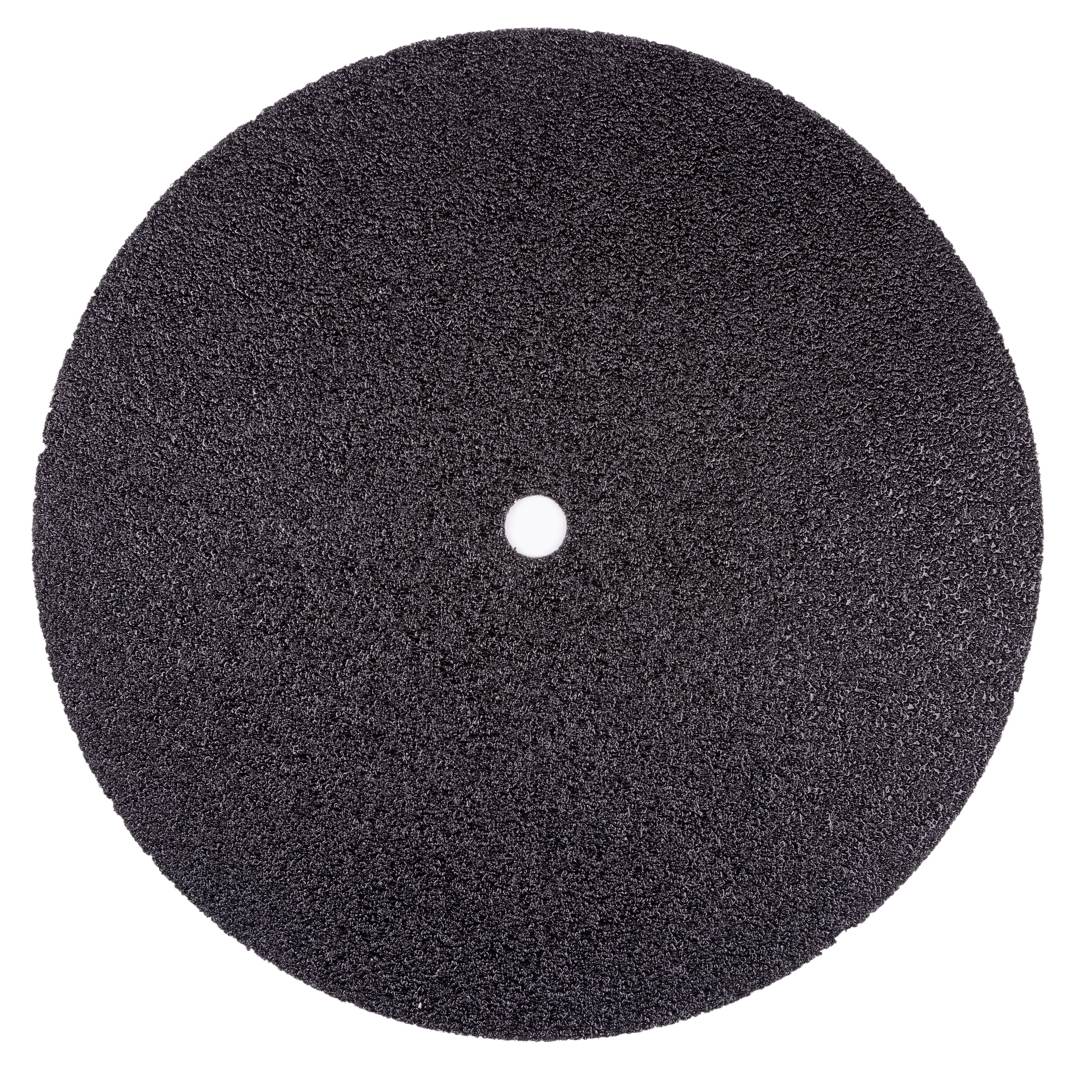
A Double-Sided Disc is a circular element having working surfaces on both sides by which it can engage, transmit force, contact friction material, or perform any working interaction with material simultaneously or alternatively from either face. The double-sided disc has been developed to maximize surface utilization, provide better operational balanc,e and keep the system optimally efficient compared to a single-sided component.
In several mechanical systems, the Double-Sided Disc works as an interface between two moving components. The symmetric or quasi-symmetric shape helps in equal load distribution and minimum vibration, together with steady performance under different operating conditions. It provides throughput enhanced by a factor of tw,o along with service life quantified in terms of hours significantly higher than that for traditional single-sided counterparts.
Core Functional Principles
The basic principle on which a Double-Sided Disc works is the controlled interaction of its surfaces. Surface interaction in actual applications may be defined as friction generation, torque transmission, material removal, heat dissipation, or pressure distribution. Therefore, this component can perform two times much work within a closely confined space while maintaining structural stability because both sides of the disc are active.
In systems of rotation, the Double-Sided Disc helps provide an aligned motion, thereby reducing axial stresses and enhancing alignment. In systems of friction, such as braking or clutch assemblies, it provides two surfaces that increase the contact area to enhance performance without a proportional increase in size.
Structural Design and Engineering Considerations
Geometry and Dimensional Precision
The geometric accuracy of the Double-Sided Discs determines their performance. The major parameters include, but are not limited to, outer diameter, inner bore diameter, thickness, flatness, and surface parallelism between both faces of the disc. This automatically implies that precision machining needs to be carried out such that equal thickness is maintained from both sides, with good surface quality for smooth functioning and even wear.
Advanced proposals of engineering provide a better organization of the groove patterns, surface textures, or perforations on the Double-Sided Disk that would promote cooling, allow debris to be carried away by air, and maintain stability in friction. All this is carefully calculated and set into correspondence with the environment for which the disk has been designed.
Surface Treatments and Finishing
Surface finishing is critical in the performance of a Double-Sided Disc. The usual surface finishing methods are grinding, lapping or polishing, coating, and thermal treatment. The method applied is mostly dependent on the functional requirements of the disc-wear resistance, corrosion protection, or any other related property.
For high-performance applications, a special coating can be applied on both sides of the Double-Sided Disc to increase hardness, reduce oxidation, or stabilize the friction coefficient at high temperatures. This in effect,t ensures a long service life together with reliable performance of the component.
Materials Used in Double-Sided Disc Manufacturing
Metallic Materials
Metallic materials are the most widely used preferred choice for Double-Sided Disc manufacture because of a combination of strength, thermal conductivity, and durability. The common metals include carbon steel, alloy steel, stainless steel, cast iron, aluminum alloys, and copper-based alloys.
Steel-based Double-Sided Discs are preferred in high-load-bearing and non-deforming applications. Cast iron discs are selected for high-friction systems because of their good heat dissipation properties and stable friction characteristics. Aluminum alloys are used where the components must be lightweight but structurally strong.
Composite and Advanced Materials
Advances in material science have made composite materials increasingly available for the application of Double-Sided Discs. These may include combinations of fiber, resin, ceramic, or metal matrix composites to allow very specific performance characteristics such as reduced weight; improved thermal stability, enhanced wear resistance, and so on.
Ceramic-based Double-Sided Discs are particularly useful in high-temperature applications where traditional metals might undergo thermal fatigue. Such advanced material ensures consistent behavior under extreme operating conditions and therefore suitability for use in aerospace, high-speed machinery as well as precision equipment.
Manufacturing Processes and Quality Control
Machining and Forming Techniques
Double-sided discs are generally manufactured through forging or casting, then stamping, and finally precision machining. However, the choice of a manufacturing method remains highly dependent on the material and size of the disc, besides its complexity in shape, as well as performance requirements.
In most cases, CNC Precision Machining is applied to maintain an equal surface finish from both sides within very close tolerances. This implies dimensional accuracy together with repeatability that ensures balance and low vibration maintenance during operation.
Quality Assurance and Testing
The quality control aspect is integral to the manufacture of Double-Sided Discs. Every single disc is checked for its dimensions, surface flaws, material composition, and mechanical properties. Non-destructive testing, ultrasonic inspection, or testing magnetic particles on the surface, besides checking and measuring surface roughness, can be used to ascertain all these features in a component.
Dynamic balance testing is vital in rotational Double-Sided Disc applications. A well-balanced system will impose minimum stresses on the adjoining components and thereby enhance their life, together with the total system. This, again, can only be assured through consistent quality assurance practices wherein every Double-Sided Disc conforms to industrial standards as well as application-specific requirements.
Performance Advantages of Double-Sided Disc Designs
Enhanced Efficiency and Load Distribution
One of the biggest advantages of using a Double-Sided Disc is that the load can be equally shared between two working faces. This results in lesser localized stresses, reduced wear and tear, and better energy efficiency of the system. It permits higher output for engineers without increasing any component size by utilizing both sides of the disc.
Extended Service Life
The dual surfaces allow more even wear patterns to develop across the component, ensuring it stays within optimum operating parameters for a longer period until gradual failure. Reduced levels of concentrated wear can also translate into lower maintenance and replacement cost frequencies, making the Double-Sided Disc a long-term cost-effective solution.
Compact and Versatile Design
A Double-Sided Disc is highly versatile in the layout of compact systems. More than one function can be performed through a single component, thereby reducing functions and space at all levels. This suits perfectly with new concepts of equipment, which are themselves efficient and integrated, hence oriented toward compact layouts.
Key Application Areas of Double-Sided Disc Technology
Mechanical Transmission and Power Systems
The double-sided disc is very important in a mechanical transmission system for torque transfer, speed adjustment, and load sharing. Its symmetrical structure helps to maintain stable power transmission with low vibration energy loss. Such features make the equipment useful mainly in industrial machines and automation, or heavy equipment.
Friction and Braking Applications
Double-Sided Disc components are widely applied in braking and clutch systems requiring dependable friction performance. Enhanced contact area from both sides develops greater braking efficiency together with heat dissipation. This makes the system safe, smooth in operation, and maintains repeated load cycle conditions-consistent performance.
Grinding, Polishing, and Surface Processing
In surface processing applications, the Double-Sided Disc allows for either simultaneous or sequential interaction of materials on both sides. This enhances the efficiency of processing and also promotes a uniform surface quality. The stability and accuracy with which the disc operates become very important parameters in grinding and polishing operations to achieve repeatable results.
Specialized Industrial Equipment
Beyond traditional mechanical uses, the Double-Sided Disc is also employed in specialized industrial equipment such as testing rigs, fluid control systems, and precision instruments. Its adaptability to custom designs makes it suitable for niche applications requiring high accuracy and reliability.
Installation and Operational Considerations
Alignment and Mounting
Proper installation is essential for maximizing the performance of a Double-Sided Disc. Accurate alignment ensures even load distribution and prevents premature wear. Mounting methods must accommodate the disc’s dimensions and operating conditions while maintaining secure fixation during operation.
Maintenance and Monitoring
Double-Sided Disc components are basically designed to be durable, but check them out once in a while and keep them clean for effective functioning. Look at the surface wear, how hot it gets, and if it vibrates too much or at all. Any of these will give hints long before big problems develop. Preventive maintenance will ensure maximizing the service life of the disc as well as caring for related system components.
Industry Trends and Technological Developments
Precision Engineering and Digital Manufacturing
The digital manufacturing technologies, which are today better known as ‘Double-Sided Discs’ among production engineers for having significantly contributed to improved final product quality, allow advanced simulation tools that enable processes of optimizing the disc geometry, material selection, and surface design at a stage even before actual physical manufacturing commences. This leads not only to higher developmental performance consistency but also shorter development cycles.
Sustainability and Material Innovation
Sustainability is another factor to shape the future development of Double-Sided Disc material and manufacturing processes. Recyclable materials, energy-saving procedures, and durable constructions are being considered by the manufacturers to eventually achieve minimum environmental effect through a total sustainability approach, meanwhile aligning with current global trends towards responsible manufacturing, in addition to resource optimization.
Customization and Application-Specific Design
The Strategic Importance of Double-Sided Disc Solutions
In its critical balance between material efficiency and the application of various adaptations, this component has become a core element in mechanical and industrial systems that support today’s engineered infrastructures. The system delivers productivity and operational reliability through enhanced performance with low maintenance requirements, together with compact system designs.
Even as industries evolve toward greater efficiency and accuracy, the function of the Double-Sided Disc will also widen. New material innovation, methods of manufacturing, and surface engineering add to its potential strength-in fact, they make sure that this is one trusted element that never fails the industrial world at large.
In summary, the Double-Sided Disc is more than just a mechanical component. It represents an engineering solution of optimal performance that combines efficiency with strength and flexibility. An understanding of its design principles, possible materials to be used in their applications as well as the potential uses, enlightens any professional user keen on safe and advanced solutions for a highly competitive industrial environment.