
A Practical, Experience-based examination of two tools that appear to be similar, but behave very differently.
Eventually, everyone who employs wood, paint, drywall, or finished surfaces will ask the same question as I did in the hardware store: Do I really need both of these? One hand is a sanding sponge, the other is a sandpaper; both appear to be necessary. Both are depletive. Both have associated numbers that represent grit. Both have a promise to produce more refined results. From a faraway perspective, the discrepancy appears to be cosmetic.
However, once you begin sanding genuine objects with round edges, imperfect joints, and layered decorations, the concept that sanding sponges and sandpaper are the same tool begins to dissociate. Not greatly. Not all at the same time. More like the slow realization that their behavior is different when you hold them, their response to pressure is different, and they form different surfaces in different ways. In the final endeavor, ” Subtle” is the place where all of the important things occur.
This isn’t a discussion of which method is more effective. It concerns understanding the purpose of their existence as separate entities first.
What Sandpaper Is Designed to Do, at Its Core
Sandpaper is candid. It doesn’t evolve. It doesn’t address. It carries out the actions that its design enables it to do, not more nor less. A flat substrate covered with abrasive particles creates a surface that wishes to remain flat. When you press it against wooden objects or metal, it will remove the material in a significant manner, especially from high elevations. This is why sandpaper has been essential for countless generations. When you want to level a surface, flatten the filler, or reduce something to its intended size, sandpaper is difficult to bypass.
This fixity is not accidental. Even though sandpaper’s feel is similar to that of your hand, it still bends less than necessary to form a shape on the substrate. This is extremely beneficial when it comes to flatness. A table, a cabinet, a door, and their surfaces are unable to be interpreted. They demand consistency. Sandpaper does that.
However, that same staleness becomes an obstruction when the surface no longer cooperates.
Why Sanding Sponges Exist at All
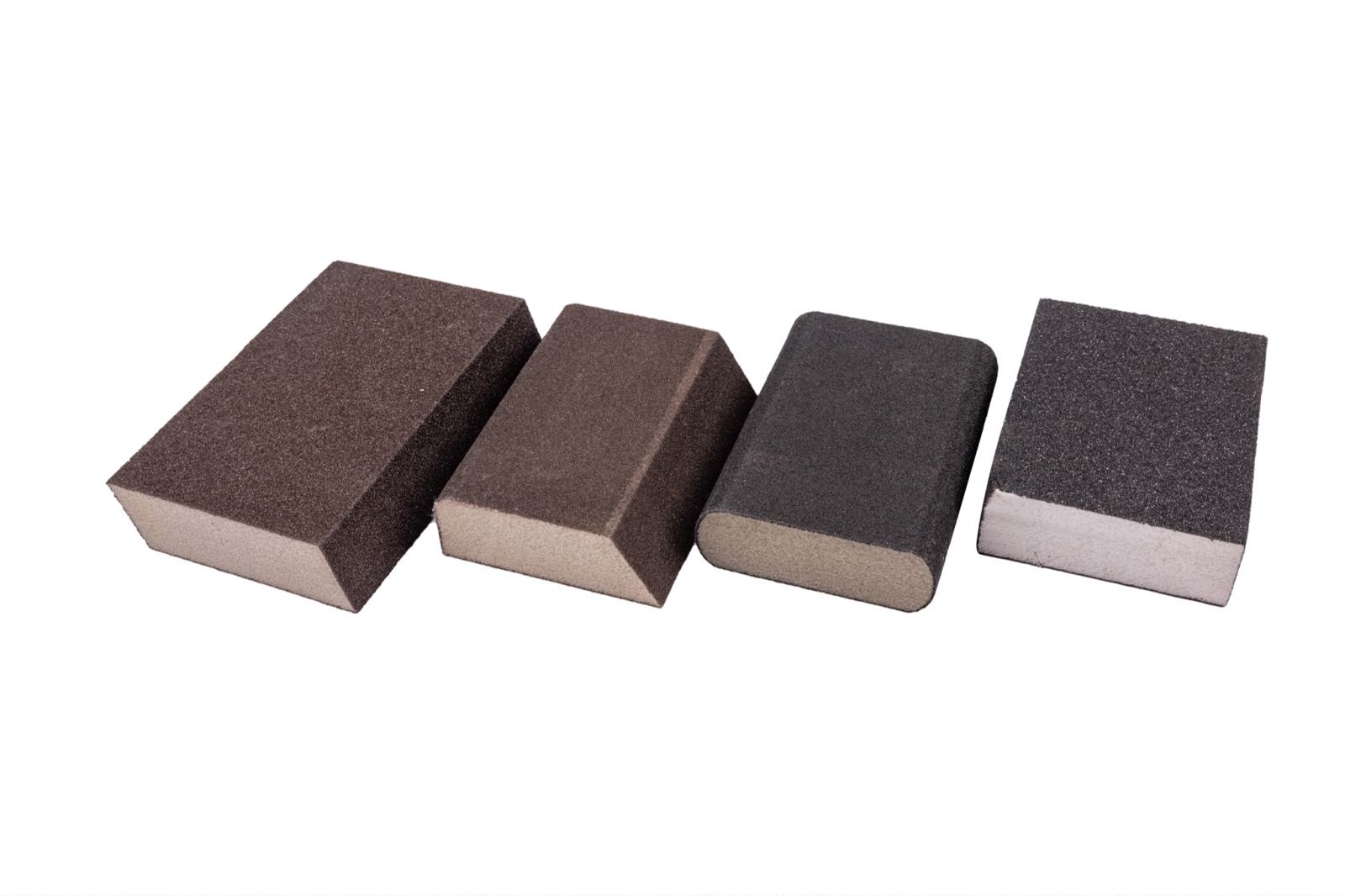
Sanding sponges were not created with the intention of becoming a popular product. They appeared because people were removing things that were not flat, not square, and not forgiving. Curves, molds, round corners, and contoured drywall joints– these shapes quickly expose the inefficacies of flat abrasives. Sandpaper typically has a harder time hitting high points, which results in the flattening of curves and the sharpening of edges that were not intended to be sharp.
A sanding sponge has a different approach to the surface. Instead of attempting to force the surface to match the abrasive, the abrasive will conform to the surface. The core of the foam is compacted, then expanded as pressure increases. This alters the entire process of material removal. Instead of aggressively cutting at pressure points, sanding is now more uniformly distributed. The outcome is a lower number of material removals per pass, but a greater degree of control over the shape.
This is why sanding sponges have a more delicate feel, even when the number in the grit states that it shouldn’t be done.
How the Tool Changes the Outcome, Not Just the Process
One of the greatest misconceptions associated with sanding tools is the idea that the number of grits alone determines the outcome. In reality, the substrate that supports the material is as important as the material itself. A 120-grit sandpaper sheet and a 120-grit sanding sponge have different behaviors on a surface. The abrasive particles may have a similar size, but their method of interacting with the material is different.
With sandpaper, the abrasive particles tend to converge on the surface at a fixed angle. Pressure is exerted directly, with a concentrated force, and is efficient. With a sanding sponge, the pressure is spread outwards through the foam. Abrasive particles tend to angle slightly differently, which softens the cut and merges the transitions naturally. This is why sponges that are sanding well are good at completing passes that are near the edge, as well as blending the surface. They do not just blend, they synergize.
This difference is especially evident when sanded edges are present. Sandpaper has a propensity to consume the edge of the material with a voracious nature; this behavior is sometimes more rapid than expected. Sanding sponges tend to alleviate the edge. They will resist sharp changes unless you actively attempt to alter them. This makes them invaluable when you want a surface to have a finished feel rather than to be machined.
The Human Factor: Hands, Fatigue, and Control
Tools are not isolated from one another. They’ve been around for a while. Sandpaper often requires the use of a block or precise finger control to avoid uneven pressure. Without the glove, the fingertips would create areas of concentrated pressure that would leave obvious markings. Anyone who has spent too much time barehanded to sand should know the fatigue that results.
Sanding sponges diminish the friction between each other— literally and figuratively. Their shape is simpler to hold. The foam is capable of absorbing small vibrations. The pressure is equalized. Over extended sessions, this is of greater importance than people think. The instrument becomes an extension of the hand, rather than a flat sheet that attempts to overthrow the leader.
This doesn’t mean that sanding sponges are more effective. It means that they redistribute the power dynamic. The sandpaper’s benefits are primarily derived from its precision, and it punishes mistakes with the greatest degree of care. Sanding sponges celebrate consistency and reduce the expense of minor errors.
Flat Surfaces Versus Shaped Surfaces
If you sand enough different objects, a pattern emerges. Flat surfaces benefit from flat tools. Shaped surfaces benefit from adaptable ones. Trying to flatten a panel with a sanding sponge is inefficient and often counterproductive. Trying to sand a curved molding with rigid sandpaper risks altering its profile.
This is why experienced craftspeople don’t ask whether sanding sponges replace sandpaper. They ask where each one belongs in the process. Early stages often demand material removal and correction. Later stages demand refinement and control. One tool moves the surface closer to its intended shape. The other helps preserve that shape while improving texture.
Understanding this division of labor changes how you plan and sanding work. Instead of overworking a surface with the wrong tool, you switch tools as the goal changes.
Dust, Cleanliness, and Real-World Use
Sanding doesn’t just remove material; it creates debris. How a tool handles that debris affects both efficiency and working conditions. Traditional sandpaper tends to clog, especially when sanding soft materials, paint, or finishes that generate sticky dust. Once clogged, cutting efficiency drops, and the paper starts sliding instead of abrading.
Many sanding sponges, especially open-cell designs, manage dust differently. The foam structure allows debris to move away from the abrasive surface, delaying clogging. Some sponges can be rinsed and reused, which extends their life and reduces waste. In environments like drywall finishing, where dust control matters, this characteristic alone justifies their popularity.
Wet sanding amplifies this difference even further. While some sandpaper is designed for wet use, sanding sponges often handle water naturally, maintaining flexibility and integrity without tearing or softening.
Cost, Durability, and Perceived Value
On the shelf, sanding sponges usually cost more than individual sheets of sandpaper. This leads many people to assume they are less economical. Over time, that assumption often proves false. Sanding sponges tend to wear more evenly and last longer. They tolerate cleaning. They don’t crease or tear easily.
Professionals rarely evaluate tools by sticker price alone. They think in terms of usable life and consistency of results. A tool that lasts longer and produces predictable finishes often justifies its cost quickly.
So, Are They the Same Tool?
They’re associated, but they aren’t the same. They address issues that are chồng on top of one another using different approaches. Sandpaper is concerned with regulating behavior through consistency. Sanding sponges have the capacity to adapt to control. One creates the shape; the other follows it.
Once you recognize the difference, the confusion is gone. You no longer seek to find the single greatest option, and instead choose tools based on your intent. Sanding is less concerned with the process of abrading and more concerned with the decisions that can be made, the removal of things that can be done, and the degree to which they can be abraded.
That alteration of thought is what sets apart the fundamental sanding from the good finishing. This begins with recognizing that soft sponge sandpaper isn’t just sandpaper.