
Sanding sponges have emerged as indispensable tools across industries ranging from furniture manufacturing to automotive repair, plastic processing, metalworking, and decorative craft production. At their core, sanding sponges combine the versatility of a flexible sponge matrix with the abrasive properties of materials such as aluminum oxide and silicon carbide, offering unmatched adaptability, precision, and efficiency for a variety of sanding and polishing applications. This article delves deeply into the composition, features, manufacturing process, applications, and professional considerations for sanding sponges, providing a thorough understanding for both industrial users and DIY enthusiasts.
Composition and Materials
A sanding sponge primarily consists of two components: the sponge matrix and the abrasive grit.
Sponge Matrix
The sponge component serves as the backbone of the sanding sponge. Its elasticity and flexibility allow the tool to conform to complex or irregular surfaces without creating scratches. Common densities include low, medium, high, and ultra-high, each suited to specific applications:
-
Low-density sponge: Highly flexible, ideal for intricate curves and delicate surfaces.
-
Medium-density sponge: Offers a balance of flexibility and firmness, suitable for general-purpose sanding.
-
High-density sponge: Provides rigidity for more aggressive material removal while still maintaining some contour adaptability.
-
Ultra-high density sponge: Rarely used, mainly in specialized industrial applications requiring maximum support during sanding.
The matrix is also designed for water resistance, acid/alkali resistance, and durability, making sanding sponges effective for both dry and wet sanding.
Abrasive Grit
The abrasive layer is critical to the performance of the sanding sponge. It determines the material removal rate, finish quality, and overall efficiency. Common abrasive materials include:
-
Aluminum oxide: Durable, suitable for sanding wood, metal, and plastic surfaces.
-
Silicon carbide: Harder than aluminum oxide, ideal for sanding harder materials such as metals, plastics, and automotive fillers.
The grit size is another important factor, commonly ranging from P60 to P320, offering versatility from rough material removal to fine polishing.
Foam and EVA Backing
The sponge matrix may incorporate low, medium, or high-density foam or EVA (ethylene-vinyl acetate). This backing provides:
-
Conformability: Allows the sponge to follow contours and intricate surfaces.
-
Washability: Extends the life of the sanding sponge.
-
Shock absorption: Reduces operator fatigue and prevents over-sanding.
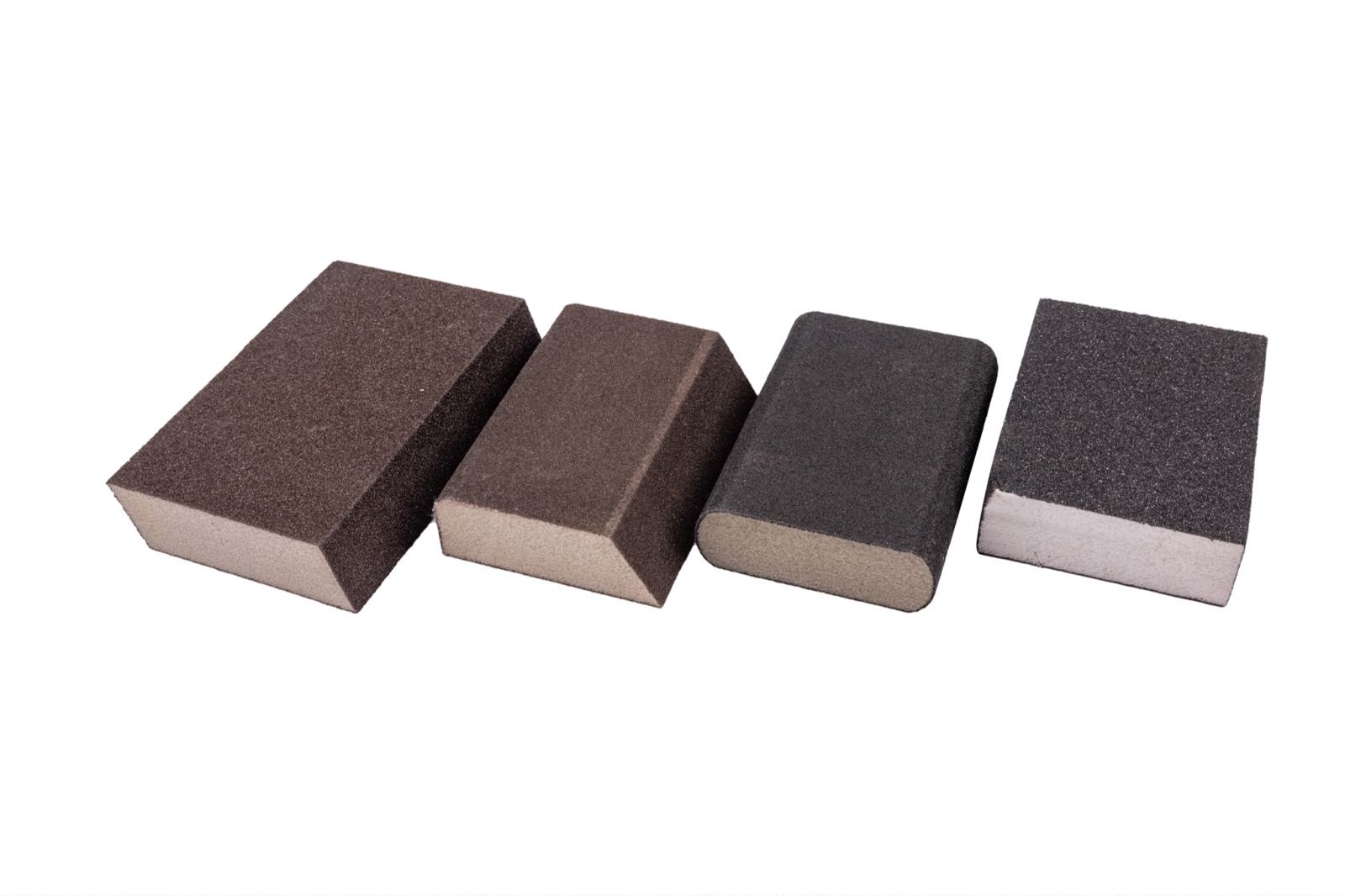
Features of Sanding Sponge
Modern sanding sponges exhibit several key characteristics that make them superior to traditional sandpaper in specific applications:
-
Softness and Flexibility: Allows the abrasive to adapt to curves, edges, and irregular surfaces without causing damage.
-
Elasticity: Provides controlled pressure during sanding, ensuring consistent results.
-
Durability: Resistant to tearing, water, acids, and alkalis, supporting both wet and dry sanding techniques.
-
Reusability: Easy to clean, offering a long service life, and reducing material waste.
-
Multi-surface Application: Can be used on wood, metals, plastics, drywall, fiberglass, automotive fillers, and even delicate surfaces like glass or ceramics.
These features make sanding sponges a versatile tool for professional craftsmen, industrial manufacturers, and DIY hobbyists alike.
Production Process
The manufacturing of sanding sponges is a sophisticated process that ensures the abrasive particles are securely bonded to the sponge matrix while maintaining flexibility and performance. Typical steps include:
-
Adhesive Application: The sponge matrix is treated with an adhesive to ensure that the abrasive grit bonds firmly.
-
Flocking: Abrasive particles such as aluminum oxide or silicon carbide are evenly applied to the sponge surface.
-
Lamination: This process reinforces the bond between the abrasive grit and the sponge matrix, ensuring long-term durability.
-
Die-Cutting: The laminated material is cut into various shapes and sizes according to application requirements, such as 100x70x12 mm, 125x100x12 mm, or thicker sizes for industrial use.
This precise manufacturing process ensures that sanding sponges deliver consistent performance across various industrial and hobbyist applications.
Applications of Sanding Sponges
The versatility of sanding sponges makes them suitable for a wide range of industries and applications:
Furniture Manufacturing
In furniture production, sanding sponges are used extensively for:
-
Manual sanding of solid wood surfaces: Provides a smooth finish and removes minor defects or imperfections.
-
Edge and curve treatment: Easily conforms to rounded corners, intricate carvings, and moldings.
-
Surface polishing: Prepares surfaces for staining or varnishing.
Their ability to sand both hardwoods and softwoods makes them invaluable in fine woodworking.
Automotive Repair
Sanding sponges are widely used in automotive body repair and refinishing:
-
Paint touch-ups: Smooths repaired areas to match the surrounding paint seamlessly.
-
Rust removal: Effectively sands rust spots on metal components.
-
Polishing: Prepares surfaces for primer and final paint layers.
The foam backing allows for even pressure distribution, preventing uneven sanding marks, which is crucial for high-quality automotive finishes.
Plastic Product Processing
Plastic surfaces often require careful sanding due to their susceptibility to scratches:
-
Scratch removal: Eliminates minor defects on plastic surfaces.
-
Contour sanding: Ideal for complex shapes and molded products.
-
Polishing: Enhances surface appearance and visual quality.
Metalworking
Sanding sponges are also effective in metal applications:
-
Rust and scale removal: Prepares metals such as stainless steel and aluminum alloys for further processing.
-
Surface smoothing and polishing: Achieves desired roughness and shine for metal components.
-
Deburring: Removes sharp edges from machined or cut metal parts.
Decorative Crafts
Sanding sponges are commonly used in art and craft applications:
-
Ceramics and glass polishing: Smooths edges and surfaces without scratching.
-
Wooden crafts: Refines the surfaces of carvings, frames, and decorative items.
-
Handicraft finishing: Enhances the tactile and visual appeal of small craft items.
Drywall and Construction
In construction and renovation, sanding sponges offer advantages for:
-
Drywall sanding: Smooths joints and compound surfaces for a professional finish.
-
Paint removal: Prepares surfaces for repainting without damaging underlying materials.
-
Surface preparation: Ensures even adhesion for coatings, sealants, or adhesives.
Technical Parameters
Sanding sponges come in various sizes and grits to suit different applications:
| ITEM | SIZE (mm) | GRIT |
|---|---|---|
| Sanding Sponge | 100×70×12 | P60, P80, P120, P180, P240, P320 |
| Sanding Sponge | 125×100×12 | P60, P80, P120, P180, P240, P320 |
| Sanding Sponge | 100×70×25 | P60, P80, P120, P180, P240, P320 |
| Sanding Sponge | 125×90×25 | P60, P80, P120, P180, P240, P320 |
The choice of grit and size depends on the material and finish required. Coarse grits (P60–P120) are used for rapid material removal, while fine grits (P180–P320) are used for polishing and finishing surfaces.
Advantages Over Traditional Sandpaper
Sanding sponges offer several distinct advantages compared to conventional sandpaper sheets:
-
Conformability: Flexible sponge structure allows sanding of curves, corners, and irregular surfaces.
-
Washability and Reusability: Can be cleaned and reused multiple times, reducing waste and cost.
-
Even Pressure Distribution: Minimizes the risk of over-sanding and surface damage.
-
Durability: Resistant to tearing, water, acids, and alkalis.
-
Versatility: Suitable for a wide range of materials, including wood, metal, plastic, paint, fiberglass, and drywall.
These features make sanding sponges an essential tool for both professional and DIY applications.
Professional Tips for Use
To maximize the performance of a sanding sponge:
-
Select the correct grit: Start with coarser grit for material removal, followed by finer grit for finishing.
-
Use wet sanding when appropriate: Enhances surface smoothness and reduces dust.
-
Maintain consistent pressure: Avoid pressing too hard to prevent uneven surfaces or damage.
-
Clean after use: Rinse or brush abrasive particles to extend sponge life.
-
Store properly: Keep in a dry place to prevent deformation or degradation of the foam.
Future Trends in Sanding Sponge Technology
Sanding sponges continue to evolve with innovations such as:
-
Eco-friendly abrasives: Utilizing recyclable aluminum oxide or silicon carbide.
-
Specialized foam matrices: Designed for ultra-fine polishing or high-pressure industrial sanding.
-
Integration with power tools: Adaptable for orbital sanders and automated polishing machines.
-
Antimicrobial and anti-clog surfaces: Extend sponge life in wet sanding applications.
These trends indicate that sanding sponges will remain indispensable in both industrial and artisanal settings for years to come.
A sanding sponge is a versatile, high-performance tool that blends a flexible, durable sponge matrix with abrasive grit for superior sanding, polishing, and surface finishing. From furniture and automotive repair to plastic, metal, drywall, and decorative crafts, sanding sponges adapt to diverse materials and applications. With proper selection, handling, and maintenance, they offer long-lasting performance, precision, and ease of use.
Whether for professional workshops or home DIY projects, sanding sponges represent a significant improvement over traditional sandpaper, providing efficiency, flexibility, and superior results across multiple industries. Their combination of elasticity, durability, and abrasive power makes them a staple in modern craftsmanship and industrial production.